Report about Tecline equipment tests during a trip to Indonesia by Przemyslaw Jocz
MIOSKON
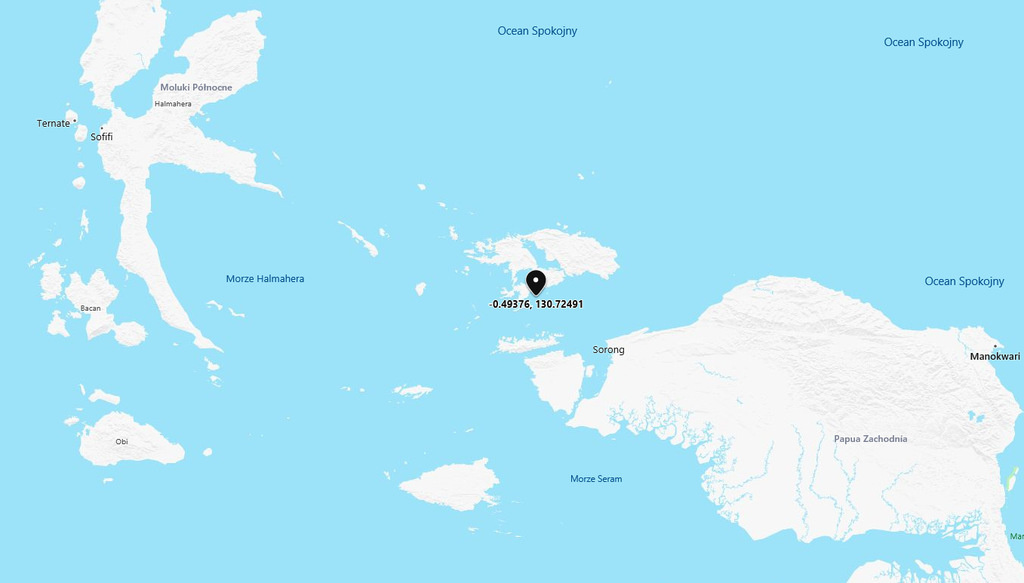
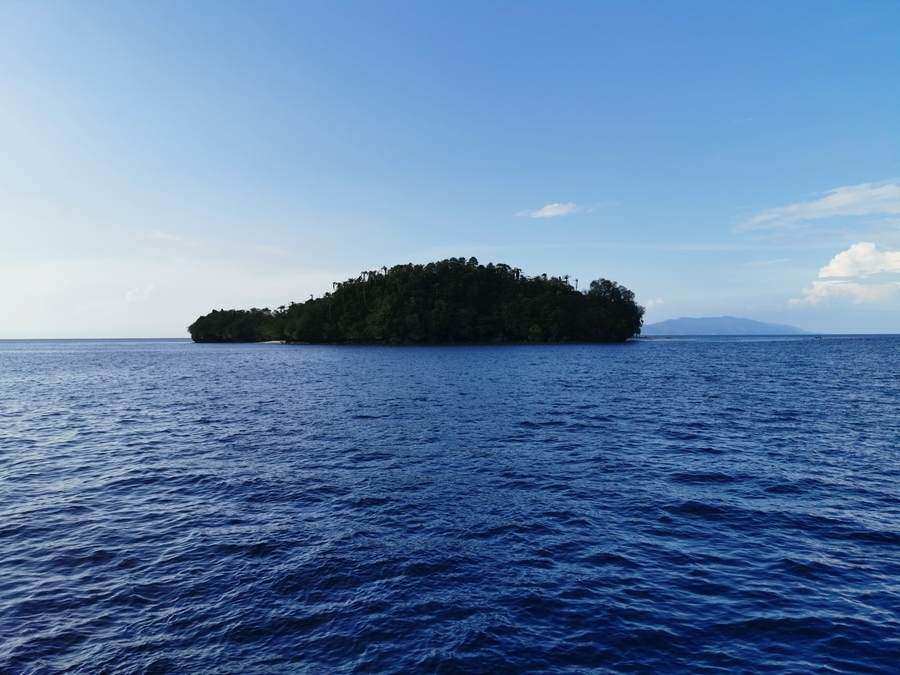
The port of Sorong is separated by only 40 nautical miles from Waigeo – the main island of the archipelago. The calm cruise lasts at most a few hours. Near Waigeo – south of the entrance to the Kabui Bay, which from a bird’s-eye view resembles a rotund wine carboy – you can find the tiny islet of Mioskon.
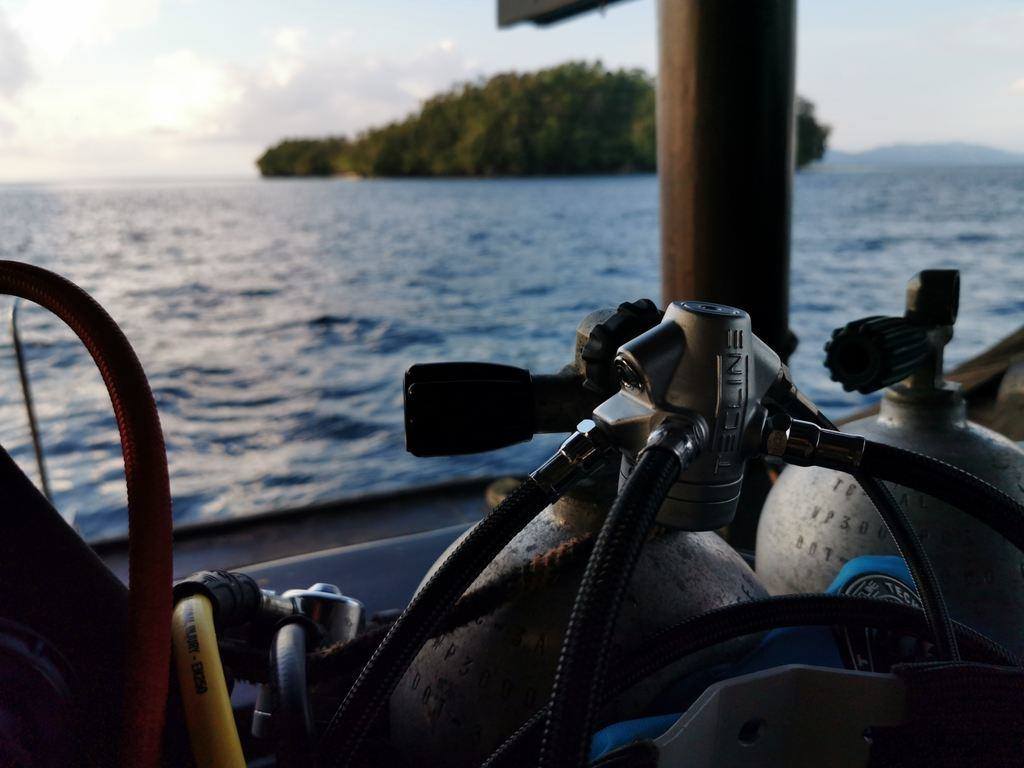
Here, the waters of the Ceram Sea merging with the Pacific turn out to be calm. Mioskon is a small saucepan-shaped hill, emerging from the almost entirely smooth indigo water surface with its tropical greens. The small – several dozen meters wide – beach only begins to shine with its blinding whiteness from a very short distance. Underneath a baldachin of coconut palm leaves, it remains hidden to the naked eye from farther away.
The reef near the islet, as well as all the other dive sites in the area, can only be reached by speedboats – to protect the natural environment, it is prohibited to use the bigger safari boats to approach the reefs.
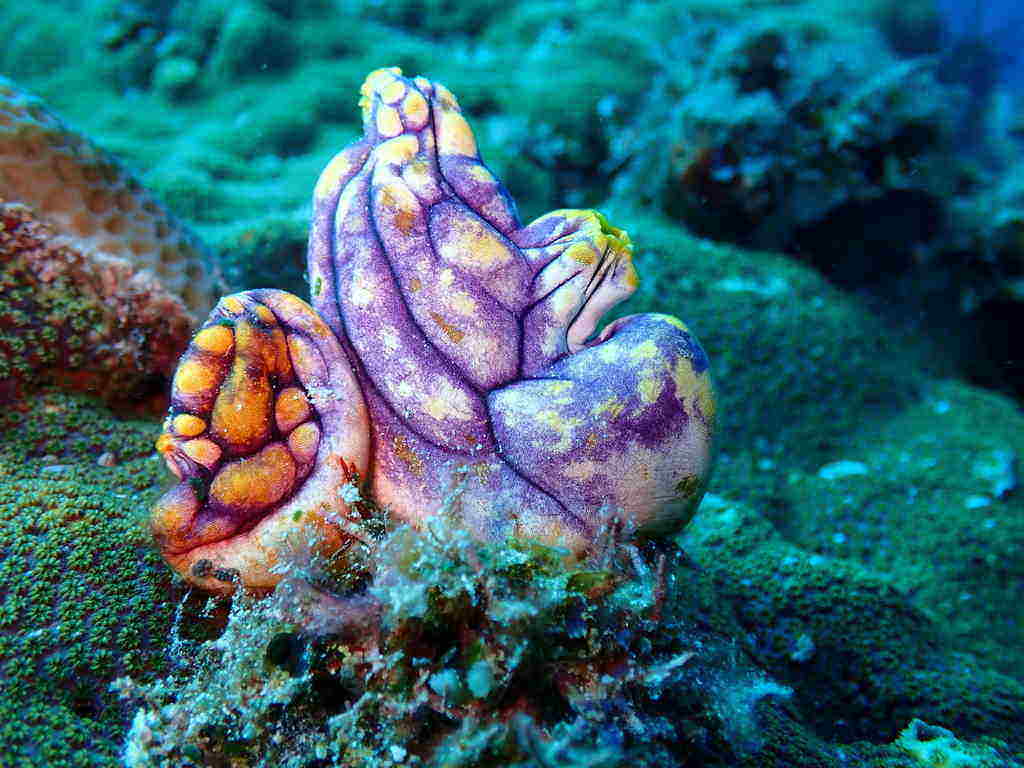
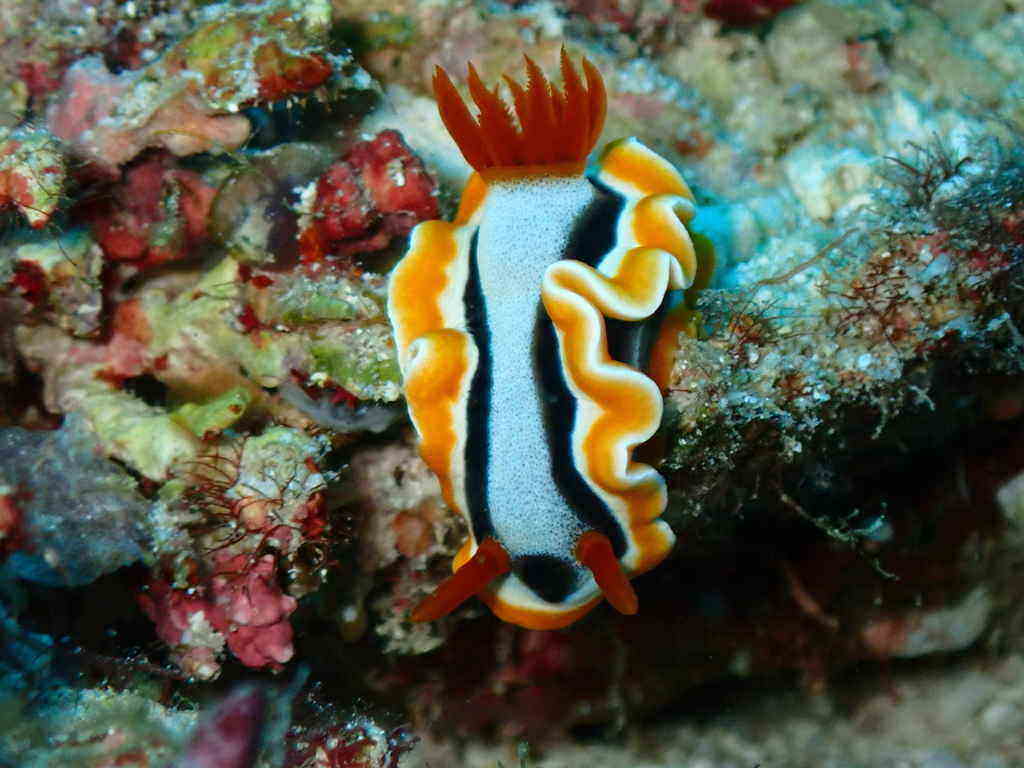
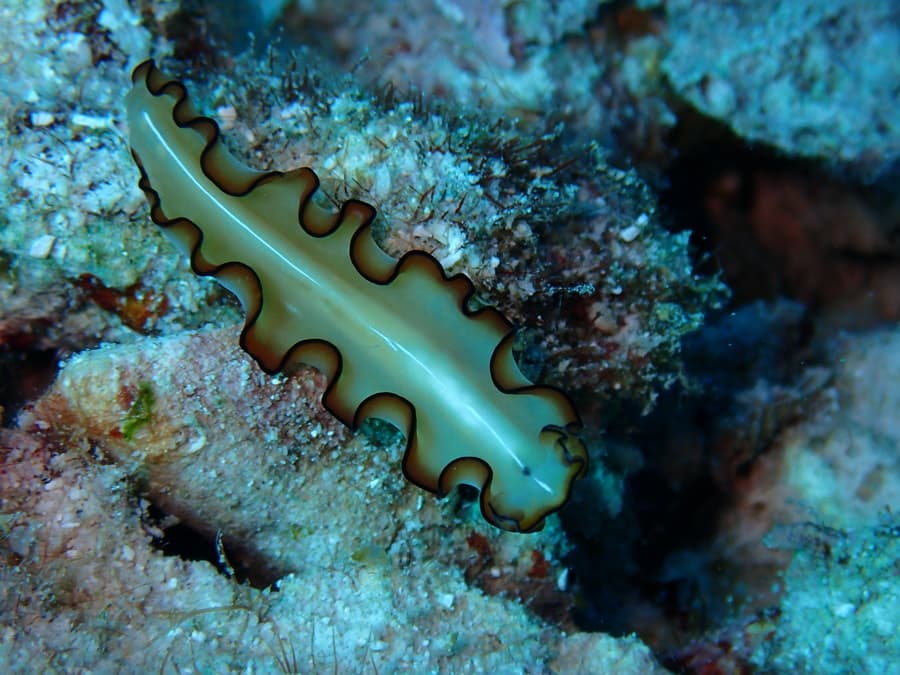
Comprised of a large amount of small but extremely vibrant formations, the reef slopes gently from 10 meters under the surface. Keeping the island on the left, you can reach the point where the bushy coastline becomes a small but charming beach. Moving forth, the flat terrain transforms into an increasingly sharp slope, eventually turning into a completely vertical wall ending with a sandy bottom at 30 meters. This location is famous for its large population of slugs.
Returning with a small motorboat to the houseboat meant taking off equipment in the water. Advanced divers do not need to be persuaded to use a buoyancy system comprised of a backplate and harness with one buckle. A set like this, in spite of appearances, can perform very well not only during technical diving but also during recreational diving, as well as on a scuba safari.
EQUIPMENT TESTS
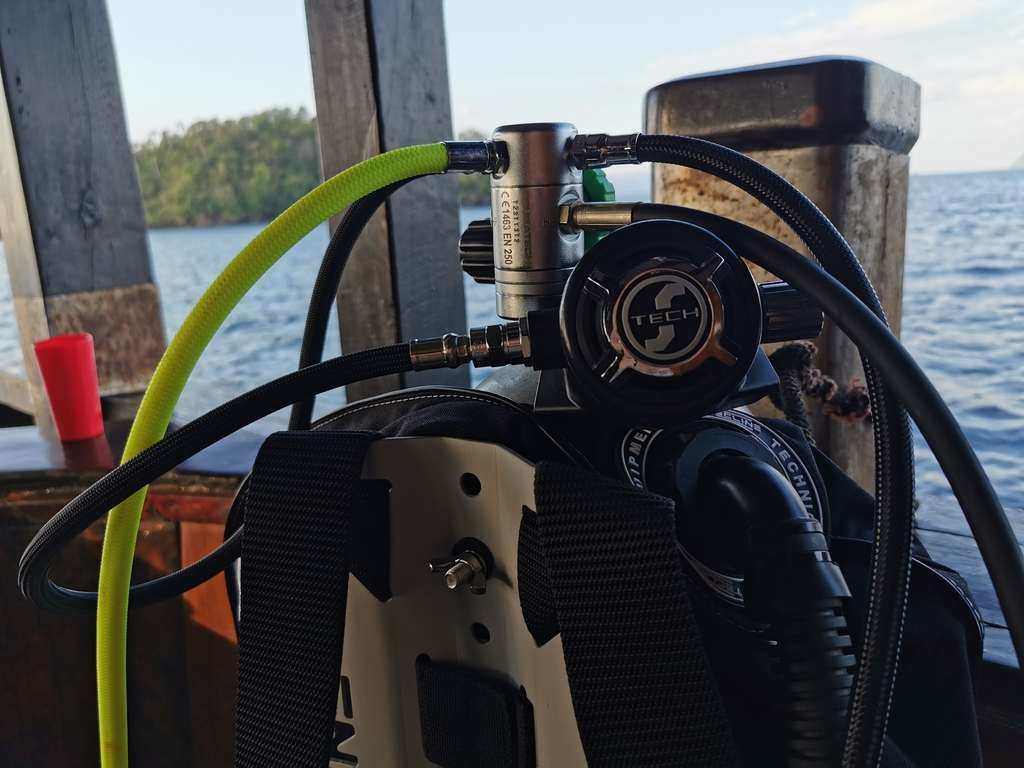
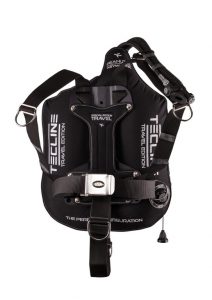
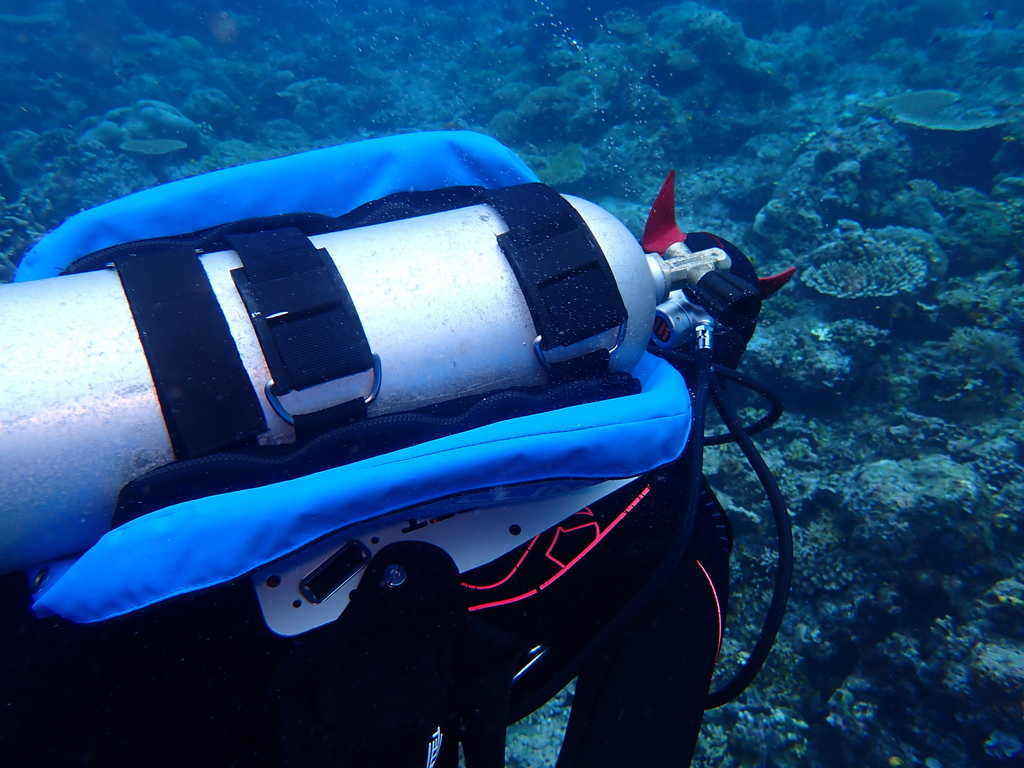
A well-adjusted buoyancy control system – Tecline Peanut 21 Travel Set – turns out to has been an excellent choice. The set is very stable both underwater and on the surface, thanks to the waist and crotch straps. Taking it off is really easy. After unfastening the abdominal belt buckle, release the shoulders by gently pulling both the inflator on the left and the D-ring – with the attached regulator – on the right. Freeing yourself from equipment is much more convenient, easier and safer than it is in case of classic jackets. A relatively rigid harness webbing (devoid of unnecessary elements) without the tendency of getting entangled helps a lot.
Between the Kri Island and the exit from the Kabui Bay, there is a wonderful reef definitely worth visiting. It is locatedright next to atinyuninhabited islet.
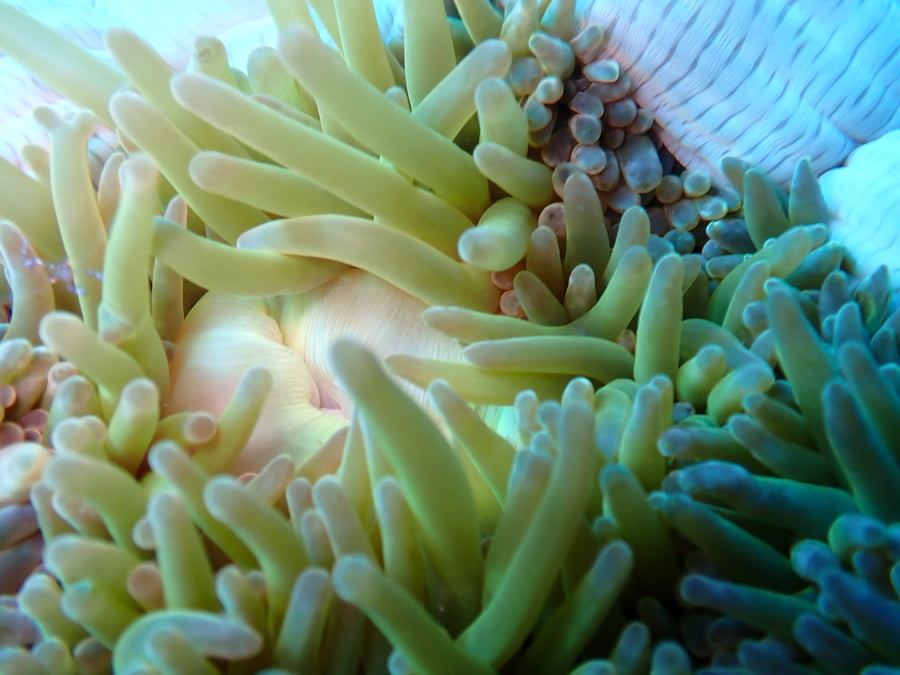
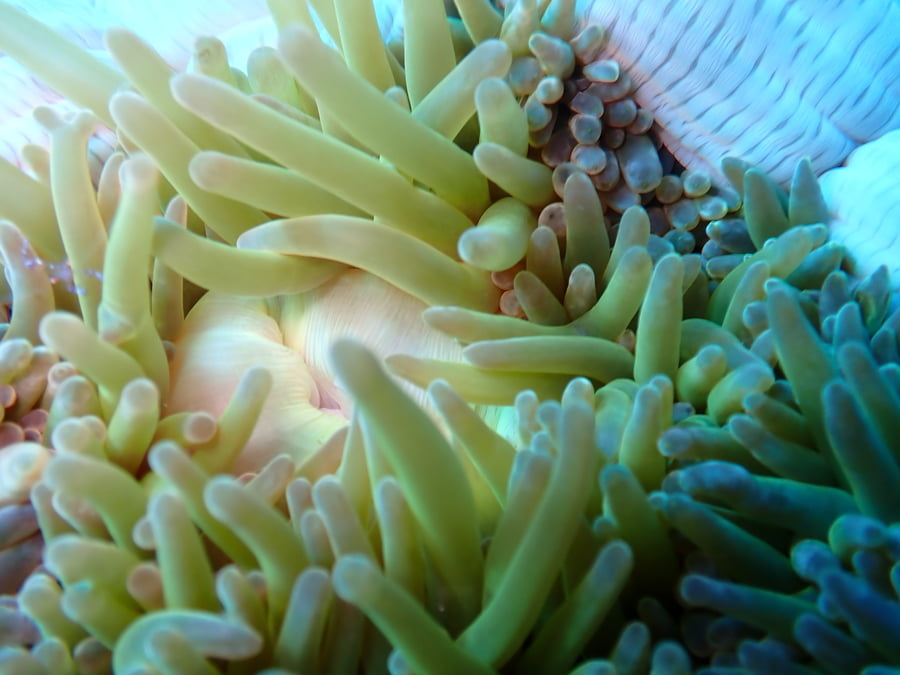
The reef – as seen from above – resembles a circle; its peak lies five meters beneath the surface. After following the current alongside of it for a bit less than 30 meters, we come across a sandy plain. This place is very characteristic of underwater Indonesia. It is populated by colonies of small – but extremely vibrant – corals. It is feasible to surrender to the gentle current which leads from the islet along the reef and further into the sea.
The conditions here – warm temperature, excellent visibility – allow for an extremely relaxing stay underwater. A high-quality buoyancy control system – a Tecline product – the Peanut pad with the latest extremely precise trim adjustment system, equipped with a row of weight pockets located along the tank has a big impact on maintaining a sense of comfort.
First completed diving course (2008) in the National Defense League (3rd class diver). He has been diving intensively since 2015. Current diving certificates: SSI AOWD (Deep, Dry Suit, Nitrox, Science), SSI Gas Blender Nitrox/Trimix, cylinders filling qualifications: Office of Technical Inspection. Volunteer Firefighter. Co-organizer and participant of ecological actions, volunteer of W.O.Ś.P. Author of one book, co-author of two. His wife Anna is a technical diver and diving partner.
Due to the pandemic emergency, you will spend the next few days at home with your families. In these difficult moments we should remember to protect ourselves and our diving equipment.
In upcoming days we will not be able to enjoy our regular diving activities. If you have used your diving equipment recently, it is imperative that you subject it to proper disinfection.
This applies particularly to:
II nd stage regulators,
masks,
snorkels,
inflators,
SMB inflation outlets
All the above elements can be disinfected in a very simple way.
DISINFECTION
Diving equipment should be immersed in ethyl alcohol (this may be rectified spirit) for 30 minutes. The alcohol may be diluted with boiled water (in room temperature) and/or hydrogen peroxide. It is recommended that the solution keeps minimum of 60% pure alcohol.
Attention!
Do not use ultrasonic cleaners for this disinfection. The alcohol can rinse out lubricants from important elements of the 2nd stage regulators.
We would like to encourage you to prepare a homemade disinfectant recommended by the WHO (link). This liquid can be used for everyday use.The recipe for this disinfectant is as follows:
– 100ml ethyl alcohol (spirit),
– 15ml of hydrogen peroxide,
– 5ml of glycerine or aloe vera gel,
– 50ml of boiled water (in room temperature).
PRECAUTIONS
We all hope that the situation will improve quickly and allow us to go diving again – at least in local waters. If it will be the case, we encourage you to temporarily modify the procedures which involve any contact with the saliva of other people.
During the buddy-checks, present the equipment functioning at distance (the partner observes but does not check the regulator by taking any test breaths).
Do not rent/borrow a diving mask without prior disinfection.
Resign from “out of gas” situation exercises.
In a real “out of gas” situation follow the normal safety procedures. After the safe ascent, pay attention to the equipment used by the receiver, do not reuse it and subject it to full disinfection as soon as possible.
We hope that the coronavirus pandemic will be stopped shortly. Looking forward to meet you soon at our favourite diving spots!